

Founder Interview with Geffrye Parsons, The Inclusion Imperative

Photo Credit: Geffrye Parsons
After years of navigating both personal and professional obstacles, Geffrye (“Geff”) Parsons founded The Inclusion Imperative, a consulting agency dedicated to creating inclusive workspaces for LGBTQ+ individuals. Geff’s mission is to help organizations cultivate environments where authenticity, and the agency to be as authentic as you want to be, thrive. With a background in business-based advocacy and workplace transformation, Geff is committed to fostering a culture of empathy and personal agency.
In this interview, Geff shares insights from his personal journey, discussing how his career has been shaped by his own experiences of coming out later in life, the challenges he faced, and how these experiences ultimately led him to create The Inclusion Imperative. He also offers valuable advice for future LGBTQ+ service providers and reflects on how being openly queer impacts his work and business philosophy.
Check out the interview below!
Can you walk us through your professional journey and how you got to where you are today?
I am a gay man who did not realise (or at least did not believe) that until the age of 28, and as a result spent half of my life, and subsequently half of my professional career, in the closet.
Among many reasons, massive family pressure to live a conventional lifestyle was a big part of why I came out later in life. I wanted to make my family proud, so I suppressed important parts of myself. I became an accountant, and married a teacher, and did all of the conventional things that were expected of me.
As a result, despite continued apparent success in my career, I became increasingly aware of a missing ingredient. That missing ingredient was authenticity, and it came at a cost not only to myself (including my professional success and my social integration, both of which were harmed by a felt need to self-regulate and self-segregate, as well as my mental wellbeing) but also to the teams and organisations within which I worked. How many potentially valuable contributions, perspectives and observations were held back or edited during that time? Doubtless, a lot.
I grew up in the UK in the 1980s under the Thatcher government, which was very right wing, and under what was known as Section 28, which was a devastating piece of legislation that effectively banned the promotion of homosexuality and even called it a “pretended" family relationship. So it was an extremely challenging time to express your authentic self in any context, including professionally.
So, while I always support being out and proud in any environment, I believe that it has to be done at the discretion of the individual, in their own time, and having regard to their own contextual assessment of their safety. I always tell people that, if they’re going to come out in a workplace environment that may not feel 100% safe, that they should make a (nerdy!) plan and write it down. It might sound ridiculous, but it can help you think about all of your options and encourage you to be as intentional and methodical as possible. Consider things like: Is there an employee resource group internally? If there isn't, is there some form of network externally that you could go to? Or some likely allies to approach? All this preparation can make things feel less like you’re at a cliff’s edge. And remember, the resources are out there to help. You’re never as alone as you think you are.
In the second half of my professional career, I decided to grasp the nettle and make up for lost time! With my penultimate employer, BNP Paribas (a French bank, based in London), I was a founding member of the LGBTQ+ employee resource group (ERG); and then, with my final employer, Macquarie (an Australian bank, also based in London), I chaired the LGBTQ+ ERG for 8 years, right up until my ‘retirement’ (from the world of financial services) in 2022.
During that time, I spent a LOT of time working on Diversity, Equity & Inclusion initiatives on a side-of-desk basis, and ultimately was instrumental in Macquarie’s recruitment of dedicated DE&I personnel. And for my work pushing LGBTQ+ inclusion in particular, I have three times been listed among the top 100 LGBTQ+ executives in the world, twice been listed on the Pride Power List of the 100 most influential LGBTQ+ people in my native UK, and in 2019 I received the Inspirational Leader of the Year award at the annual British LGBT Awards.
In early 2022, I took Macquarie to #1 in the annual Stonewall Workplace Equality Index, making it officially the most LGBTQ+ friendly workplace in the UK at that time. This was the perfect ‘mic drop’ moment for me to pass on the reins to the proteges I had been training as my successors, so I agreed with my boss (the CEO) to ‘retire’ from Macquarie, so that I could use my experience and expertise – especially the front-office executive perspective, which is so often lacking – to focus full-time on helping other organisations on their inclusion journeys.
That is how my independent DE&I consulting practice, The Inclusion Imperative, was born in 2022. In the summer of 2023, my Canadian husband and I relocated to Vancouver, BC, from where The Inclusion Imperative now operates.
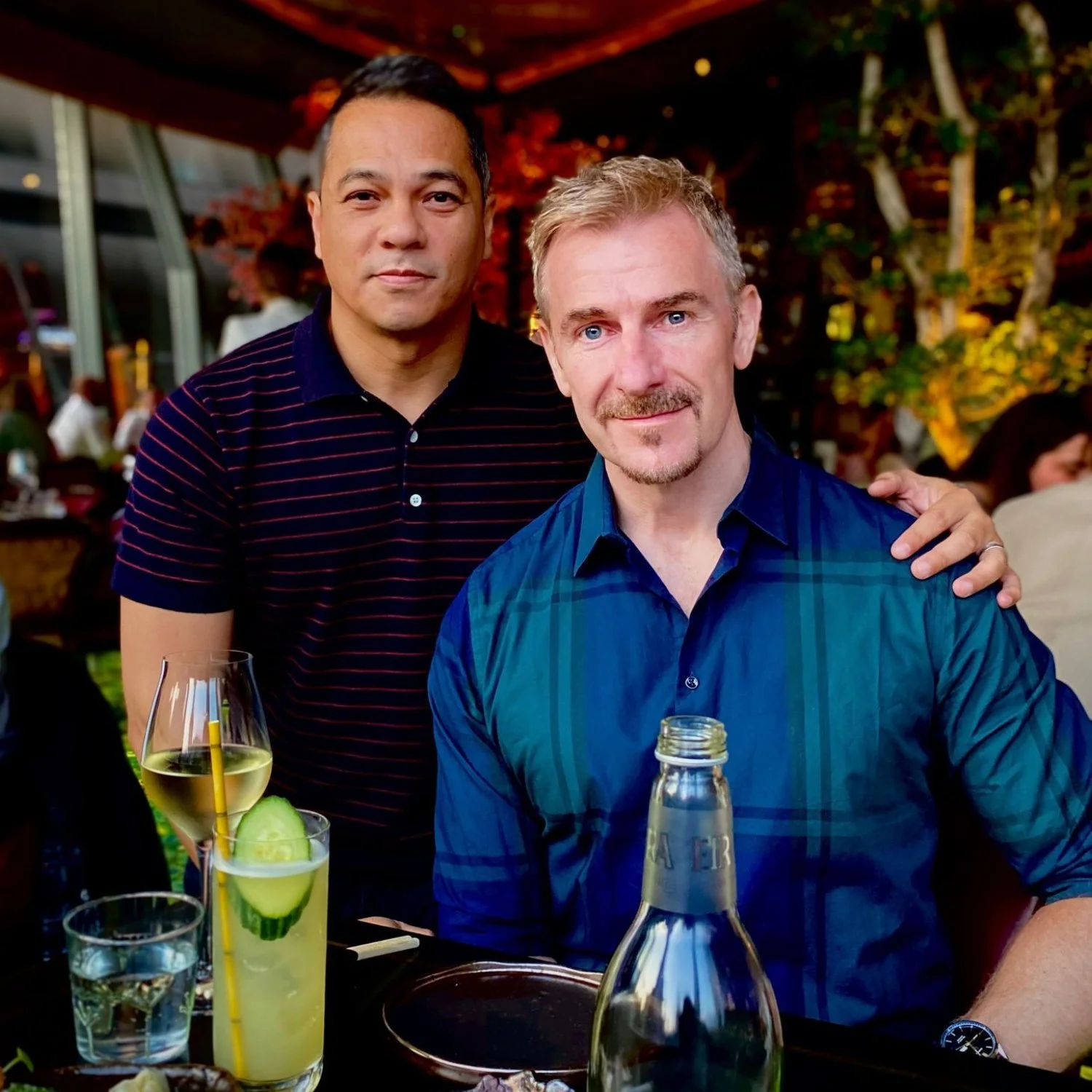
Photo Credit: Geffrye Parsons
What inspired you to offer the services you provide?
Having spent 35 years in front office executive roles in the financial and professional services industries prior to founding The Inclusion Imperative, I am acutely aware of the flawed approach often taken to DE&I initiatives in organisations. This has too often resulted in their apparent failure to create change - which in turn has lent substance to the mistaken assertion that DE&I does not work, and used as a justification for the current pushback from many quarters.
This is what sets me apart. Unlike most inclusion and culture transformation practitioners, whose backgrounds were typically in Human Resources, I do not stop at theory, important though that is. Instead, I bring a practical, reality-based focus to the work, to ensure that the initiatives do not “get lost in translation” en route from back office to front office. This also involves emphasising the crucial business, commercial imperative of workplace inclusion; endless research has proven unequivocally that an inclusive, psychologically safe work environment increases creativity, innovation, problem-spotting and -solving, engagement, productivity and retention.
In other words, inclusion is not just the “right” thing to do; it is also the best thing to do.
This principle inspires the work I do and the services I provide through The Inclusion Imperative: whether that be full-on diagnostic consulting projects, or workshop-based training, or even just keynote speaking. It is about making sure that businesses understand that, contrary to what some people like to suggest, inclusion is good for individuals, teams and business results.

Photo Credit: Geffrye Parsons
What is one of the biggest challenges you have faced in your journey as a service provider, and what did you do to overcome this?
One of the biggest challenges which DE&I practitioners face is the need to filter out organisations which are seeking one’s services for the “wrong” reasons. Typically, this means undertaking DE&I for tokenistic, performative, check-the-box type reasons.
DE&I is about culture change and leadership development; it cannot be done meaningfully by just indulging in isolated optics, like getting a minoritised keynote speaker in without, in any way, leveraging the learnings from that, or by adorning the office with visible paraphernalia (e.g. rainbow flags during Pride Month) which does not reflect the day-to-day experiences of staff.
So it is a constant challenge to try to root out performativism, especially given that I am of course external to my clients and therefore do not experience their culture day-to-day. No self-respecting consultant wants to be used by clients (even if inadvertently, as is sometimes the case) to satisfy an image while moving the culture needle not one bit.
I am fortunate in that, being a white cisgendered man and therefore having no obvious physical minority characteristics (aside of being a bit ginger!), I am rarely called upon in this way; the greater temptation for organisations is to target people with visible minority characteristics, such as gender, ethnicity and (where visible) disability. But it does happen.
So in those cases, I take pains to discuss with my clients their broader plans and L&D programmes, to establish how my delivered service fits in to that, with the aim of ensuring that it is not seen as an isolated event – because, when it is (as is often the case with, say, one-off unconscious bias training), it can actually be destructive, creating cynicism among staff and managers

Photo Credit: Geffrye Parsons
If you could give one piece of advice to future LGBTQ+ service providers within your field, what would it be?
I would advise future LGBTQ+ service providers in the DE&I space to do several things! These include:
Being prepared for criticism – as recent events in the United States have shown, not everyone understands the value of inclusion, even if it has been well demonstrated.
Focusing on the business perspective – ultimately, clients are in the business of making money, so they will want to understand how inclusion initiatives like inclusive leadership development will generate that; this means a need to work with business partners, not solely HR teams.
Resisting the temptation to “embarrass” people if they do not know about, understand or agree with something inclusion-related — shaming never changes behaviour, it actually entrenches it, and too often I have seen people turned against inclusion by a grandstanding approach from others.
Always remember to take care of yourself and find a healthy work-life balance, especially if you hold intersectional identities. You carry these experiences and stories with you 100% of the time, so you must prioritise making space and time to take care of yourself.
How does being openly queer inspire or impact your business?
Being openly queer is absolutely essential for my business.
As someone working with organisations and professing the importance of having agency to bring as much or as little of one’s authentic self to the work environment as one wishes, it is critical that I walk the talk. As noted earlier, failure to embrace my authentic self earlier in my career caused significant harm, both to myself and to the teams and organisations within which I worked. So that is not a mistake I can allow to be repeated, even if some workplace situations test my safety boundaries.
Of course, not every work environment is one that fosters a sense of individual inclusion safety, which is the foundational level of psychological safety. So the conversation we should be having is about agency, even more than authenticity. We can support and encourage authenticity all we want, but that doesn’t mean that you have to be the same person in the office on Monday morning as you were in the pub on Saturday night. And that’s what I mean about agency: it should ultimately be your call to show up in whatever capacity is right for you
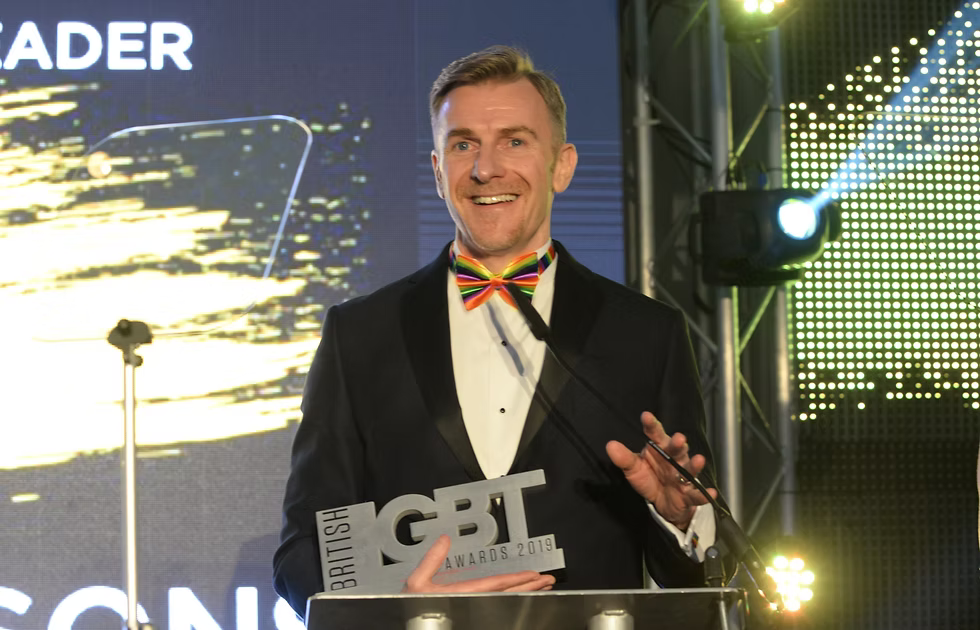
Photo Credit: Geffrye Parsons
What brands or services by LGBTQ+ founders are your go-to's and why?
I love a good brand! – so I could easily say something like Apple, with openly gay Tim Cook at the helm. Or something fun, like RuPaul’s Drag Race!
But since I spend a lot of time and effort working in the voluntary and not-for-profit space to boost LGBTQ+ rights and inclusion, I would instead opt for smaller, more under-the-radar organisations – like Stonewall in the UK (which has remained devout in pursuing LGBTQ+ inclusion, even long after its initial objective of equal marriage was met), OutRight International, Rainbow Railroad, or Open for Business, of which I am a Trustee.
So many small organisations operate at the coalface of LGBTQ+ rights and inclusion, often in very hazardous settings. With homosexuality still criminalised in over 60 countries and a hostile movement gathering in many more, the work of these people should never be underestimated. They are all heroes, and we owe them a great deal.
Who is your favorite LGBTQ+ celebrity or figure, and why?
There are so many LGBTQ+ celebrities to choose from! But as a tennis-obsessive, it would be remiss of me not to cite the inimitable Billie-Jean King, who blazed a trail initially for feminism in sports, and subsequently against the sort of homophobia displayed by the likes of her one-time rival, Margaret Court. Billie-Jean’s legacy is multi-aspected, profound and enduring.
Can you share one fun fact about yourself?
Well, the spelling of my name is pretty unique! It is (at least according to my father, who studied English literature) the original ancient English spelling, which was used by the famous writer Chaucer (whose name spelling is usually now modernised to “Geoffrey”).
If you Google “Geffrye” you will find only (a) a museum in London that used to bear that name (it was the surname of its founder), and (b) me.
Regardless, I usually shorten it to just Geff anyway - not only because I prefer it, but because I cannot reasonably expect anyone to spell “Geffrye” correctly!
