

Founder Interview with Emily Willis, Modment Studio
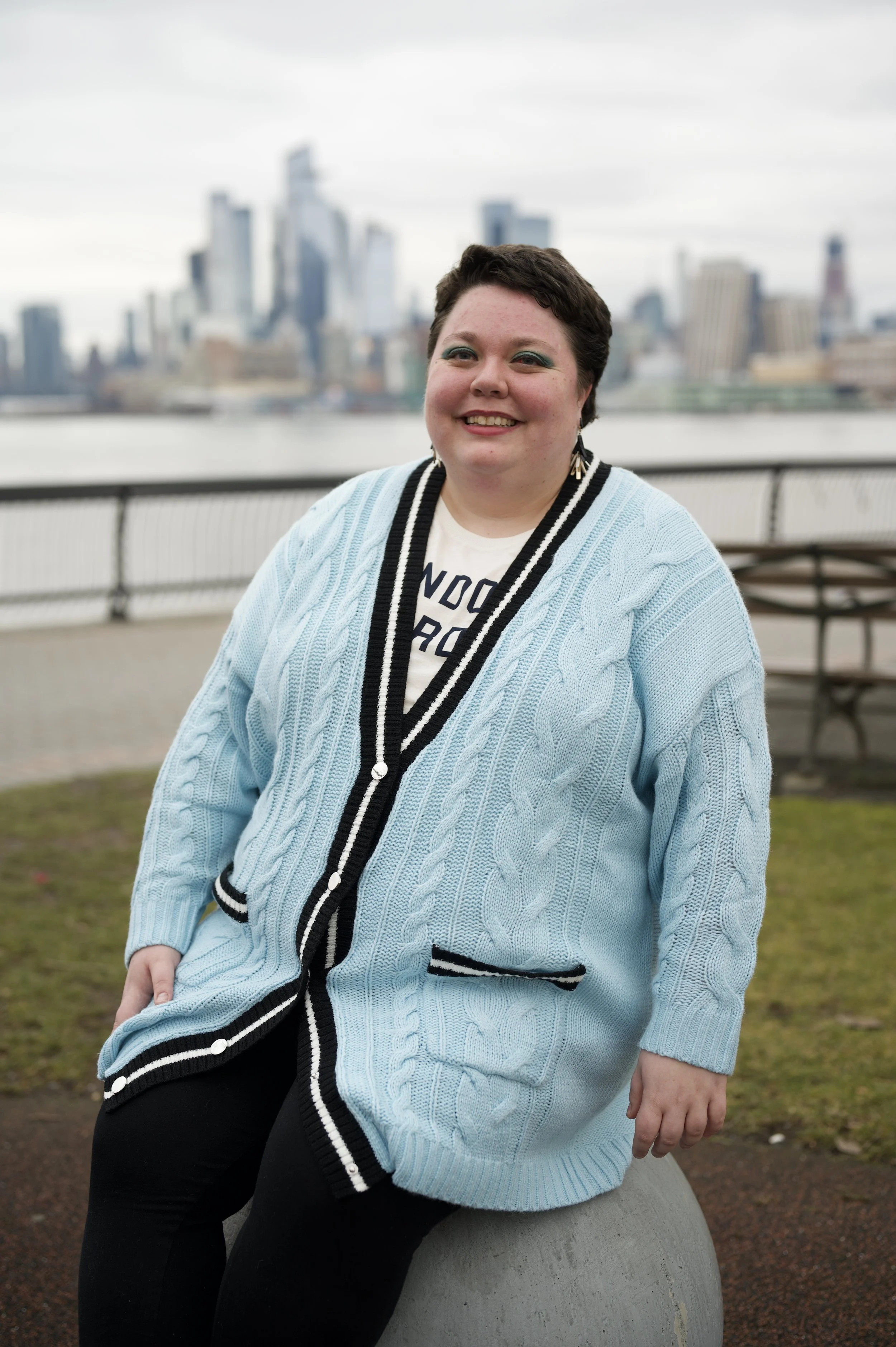
Photo Credit: Modment Studio
Emily Willis is the Co-Founder of Modment Studio, a web design and development studio that builds intentional, human-centered websites and brand systems. With a background in writing, branding, creative strategy, and over a decade of experience running a comics business, Emily brings heart, clarity, and vision to every project. She and her business partner, Grace, met during a UX/UI course and quickly realized their skills were the perfect match. Together, they help small businesses and creative founders build digital spaces that reflect who they are.
During the interview, Emily shared how her childhood love for writing, history, and the internet led her to unexpected places, from museum curation to comics publishing to UX design. She spoke candidly about the lessons she has learned as a queer service provider, how she navigates moments of challenge or misalignment with clients, and why she believes imposter syndrome is a sign of high standards, not a failure. We also got a glimpse into what makes Emily light up: the joy of human-centered design, a strong sense of community, and a deep commitment to building things that matter.
Check out the interview below!
Can you walk us through your professional journey and how you got to where you are today?
Ever since I can remember, I’ve had a notebook and pen in my hand. Writing has always been second nature, and I still prefer to write that way. I was one of those kids scribbling long fiction stories in every spare moment throughout high school. By college, I wasn’t totally sure writing could be a real career, so I chose history partly because I was good at it, and partly because when I found out I could specialize in museum curation and historical preservation, I thought: sign me up. My three childhood passions were writing, history, and the internet, and I’ve somehow ended up working in all three.
I’m also a military kid, so I moved around a lot growing up. My favorite place was Germany, where I lived for six years. After college, I built a ten-year writing career and even published three books, though not under my real name. I used Birdie Willis, a name my mom gave me as a kid that always felt like mine anyway.
My wife introduced me to the world of comics while working as a colorist for an indie group. That was during a golden moment for queer online comics—conventions, self-publishing, finding printers in Canada because no one in the U.S. would touch explicit content. We became part of that first wave of radical, gay comics. We wrote and created together for ten years, did shows, sat with Prism Comics at San Diego Comic-Con, and had a blast. Writing for comics is its own kind of magic—it sits somewhere between screenwriting and novel writing, but with its own rhythm, symbolism, and a beautiful spirit of collaboration. I loved it.
When the pandemic hit, our editors were all laid off. It gave me the space to step back and reassess. I ended up in a UX/UI bootcamp where I met Grace, who became my accountability buddy, then my best friend, and now my business partner. She came to me with the idea for Modment Studio, and I said yes without blinking. I never thought I’d run a web design and development business, but here I am, surrounded by notebooks, still writing in my own way, and doing work I love, with a support system I’m so grateful for.

Photo Credit: Modment Studio
What inspired you to offer the services you provide?
What inspired me to offer the services I do really came from a winding, creative path and a bit of necessity. Before Modment, I spent over a decade writing comics with my wife, building and marketing our brand from the ground up. I designed our booths for conventions, created packaging for merchandise, ran all our websites and social media, you name it. So when the pandemic hit and all our editors were laid off, I realized I’d already been doing design, marketing, and branding strategy for years—I just hadn’t named it as a business yet. It felt like a natural next step to take those skills and use them to help others tell their stories with clarity, heart, and impact.
That next step got a huge boost when I met Grace. I’ve never trusted someone as quickly, other than my wife, as I did Grace. It’s grown into this fantastic friendship; she’s like the sister I didn’t even know I needed. Grace and I have incredibly complementary skills. She brings years of coding, branding, and design experience, and I bring marketing, strategy, and storytelling. Between the two of us, there's nothing we can’t figure out. What’s more, we’re both lifelong learners who actually like solving hard problems and evolving with each project.
What gives me life about this work is how much humanity is baked into it. I love how creative strategy and design can be used to make people feel seen, understood, and excited about what they’re building. I love connecting the dots between someone’s idea and the systems that will bring it to life.
I love creating structure where there was chaos, clarity where there was confusion. And I love doing it all with a team I trust and believe in. I get to build real relationships, flex my creativity, and help others thrive, and to me, that’s the dream. Between the two of us there's really nothing we can't tackle, and the best part is that we love to learn, so we're always down to upskill!

Photo Credit: Modment Studio
What is one of the biggest challenges you have faced in your journey as a service provider, and what did you do to overcome this?
One of the biggest challenges we’ve faced as service providers is navigating those moments when things stall or communication breaks down. We’ve had clients who unintentionally drag out the process or just disappear, and that can be frustrating, especially when you really care about helping people succeed. To address that, we’ve put a lot of effort into refining our onboarding process, so we’re aligned from the start, both personality- and service-wise. We ask folks upfront about their communication style and expectations, and we look for red flags early on. We’re a small team and we really value our time, so we try to make sure we’re only taking on clients we’re actually a good fit for.
We’ve learned that consistent, clear communication is the key, and just one channel of communication. That way, everyone knows where to look and what’s going on.
I’ll often send clients a quick breakdown like, “Here’s everything I’ve sent, here’s what’s coming next,” so they’re never left wondering. And if they don’t hear from me for a few days, they know it’s not radio silence—it’s me doing the work I outlined. That kind of structure builds trust and keeps things moving.
However, even with all the structure and clarity, things can still go off track. When that happens, I approach it the way my dad, who had a managerial role in his job in the Air Force, would handle these situations, by leading with empathy and open dialogue. I’ll think, “Okay, how can we make this work for both of us?” I try to listen for the threads: maybe they’ve mentioned something about being overwhelmed or missing deadlines, and I’ll use that as a cue to say, “Okay, I hear you. Here’s where I’m coming from, how can we support each other to get this done?” That mindset of collaboration, not confrontation, usually goes a long way.
And then, when needed, Grace steps in. She’s no-nonsense in the best way. Grace is the one who says, “Okay, here’s the hard deadline. Let’s move.” It’s a great balance—we get to lead with empathy and adaptability, but we also have clear boundaries and accountability built in.

Photo Credit: Modment Studio
If you could give one piece of advice to future LGBTQ+ service providers within your field, what would it be?
Someone once told me something that really stuck: the people who experience imposter syndrome are often the ones holding themselves to the highest standards. That resonated deeply. I learned that through a course I’m taking with the Maine Women’s Business Center on boundaries in business—highly recommend, by the way. The instructor, Hannah, said it’s not a flaw; it’s actually your brain’s way of pushing you to keep striving. Imposter syndrome doesn’t mean you’re not good enough. If anything, it means you’re deeply aware of what it takes to be good, and you’re committed to showing up.
You’re really not alone. Many of us in design, development, marketing, and creative work share the same worries: imposter syndrome, comparison, and the fear that we’re not doing enough. I’d be lying if I said I didn’t feel it too. I mean, I’m constantly comparing myself, wondering if I’m measuring up.
But what’s helped me most is community—finding people who get it, who are right there with you in the mess and the magic of building something. If you don’t know where to start, just say hi to me. Seriously. I mean it when I say I love connecting with people.
I always joke with Grace that I was born with Lisa Frank Golden Retriever energy. So if you’re looking for community, connection, support, reach out. Say hi! That’s all it takes. Some of my favorite moments have come from just hopping on a call with someone, even if it doesn’t lead to anything formal. At least we saw each other. At least we said hello. And sometimes, that’s all it takes to start something meaningful.
How does being openly queer inspire or impact your business?
Since we're based in the USA, there was this moment really recently where I looked at my business partner, Grace, and said, "you know, we don't have to do anything on social media for pride month this year if it feels too risky since we're in the tech space" and without missing a beat she went to change our instagram bio to say "PROUDLY QUEER OWNED", and then told me to never worry about anything of that nature again. "If they don't like it, we don't need to work with them. I don't want their money." I've never met an ally that truly walks the walk and talks the talk the way she does.
I also want to say that I’ve never had anyone more supportive than my wonderful wife. We’re coming up on 10 years of marriage and 15 years of being together this year, and I can’t believe what an incredible cheerleader she is, day after day, time after time. I’ve never met anyone else like her and I adore her so immensely. She inspires me to wake up every day, ready to kick ass and take names!


What brands or services by LGBTQ+ founders are your go-tos and why?
I have to give a little shout out to the Queerly ME directory that does great work helping queer businesses in Maine shine! They're a great resource and pillar of the queer community here in Maine where I'm from, and I think their work is incredibly important!
Who is your favorite LGBTQ+ celebrity or figure, and why?
MIKA. I just adore how he manages to express so many different, multi-faceted elements of the queer experience into his music. And his music is always evolving, ever-changing, and sometimes you get this glimpse into what he wrestles with and how he views his own personal identity, both what he presents outwardly and what he feels internally. It's music that is so incredibly catchy but has this incredible level of subtext that never stops shifting.
Can you share one fun fact about yourself?
I've got several different published comic books/series to my name! Over the Garden Wall: Soulful Symphonies; SEEN: The True Stories of Marginalized Trailblazers: Rachel Carson:, and Of Her Own Design. I also have a self-published comic book I wrote and my wife did the art for called If The Shoe Fits that's a gay retelling of Cinderella that won 1st place at the Small Press and Alternative Comics Expo and is part of the Library of Congress' comics collection.
